
Self-produced music tracks are recordings where a single artist controls the entire creative process, from beat-making and arrangement to mixing and mastering, without a commercial label or external production team. Independent artists and labels now represent nearly half the global market in 2026, driven by affordable digital audio workstations like Ableton Live, FL Studio, and Logic Pro X. That shift means the music you discover on Spotify, SoundCloud, or Apple Music is increasingly likely to be self-produced. Knowing how to identify self-produced music tracks gives you a sharper ear, a deeper appreciation for creative independence, and a smarter way to support the artists who are actually doing it all themselves.
How to identify self-produced tracks using metadata and digital footprints
The fastest way to verify a self-produced track is to examine its metadata. Credits for producer, songwriter, mix engineer, and mastering engineer are embedded in every properly distributed song. When one name appears across all those roles, that is a strong signal of genuine self-production. Platforms like Discogs and Genius provide verified credit histories that go far deeper than what streaming apps display on the surface.
True self-produced tracks typically leave what researchers call a "production credit network," a visible chain of linked names across platforms connecting the musician, producer, and engineer. When that network collapses into a single person, you are almost certainly looking at a self-produced work. By contrast, missing ISRCs, vague producer credits, and duplicated publisher fields are red flags pointing toward mass AI uploads or manufactured content with no real human behind the board.

A consistent social footprint is equally telling. Genuine self-produced artists leave a trail: live performance clips, studio process videos, interviews, and an evolving catalog that shows growth over time. A consistent social history across Instagram, YouTube, and TikTok strongly supports authenticity, while AI-generated or outsourced tracks often sit behind thin, generic profiles with no real backstory.
Here is what to look for when scanning credits and digital presence:
- Single-name credit block: Producer, writer, and engineer credits all point to one person.
- ISRC presence: Every legitimate self-released track should carry a registered ISRC code through a distributor like DistroKid or TuneCore.
- Distributor page consistency: The artist name, release date, and label field should match across Spotify for Artists, Apple Music for Artists, and the distributor backend.
- Social media evolution: Look for posts that document the creative process, not just polished promotional content.
- Live performance footage: Real artists perform their material. Search YouTube for the artist name plus "live" or "session."
Pro Tip: Search the track title plus the artist name on Genius first. If the production credits are blank or list a generic entity like "Unknown Producer," cross-check on Discogs before drawing any conclusions.
How to recognize independent music through audio analysis
Listening carefully is the second pillar of identifying self-produced work. Independent home productions carry sonic signatures that label releases rarely share. The most reliable of these is natural vocal phrasing. Self-produced artists record themselves, which means the vocal performance is often raw, emotionally direct, and slightly imperfect in timing. That imperfection is a feature, not a flaw. It signals a real human making real decisions in real time.
Here is a practical listening framework you can apply to any track:
- Listen on headphones first. Earbuds flatten stereo width and mask low-end decisions. Over-ear headphones reveal how the producer handled the mix, particularly whether the bass and kick drum are balanced or muddy, which is a common home studio challenge.
- Check the dynamic range. Commercially produced tracks are often heavily compressed for radio. Self-produced tracks sometimes retain more dynamic variation, with quieter verses and louder choruses that feel organic rather than engineered.
- Evaluate the reverb and room sound. Home studios frequently use digital reverb plugins like Valhalla Room or FabFilter Pro-R. The result is a specific kind of spatial depth that differs from acoustic room recordings in professional studios.
- Notice the transitions. AI-generated music often exhibits repetitive melodic phrasing, unnatural transitions, or synthetic vocal artifacts such as flattened emotional intent and clipped syllables. Human self-producers make deliberate, sometimes unconventional choices in how they move between sections.
- Play the track multiple times. Details like a slightly off-grid hi-hat, a breath before a verse, or a subtle pitch correction artifact only reveal themselves on repeated listens.
Production polish is not a reliable indicator of self-production. A key misconception is that self-produced tracks must sound rough. Many independent artists achieve studio-grade sound today using the same plugins and monitoring setups that professional engineers use. Neakjohnson, the Seattle-based hip hop artist behind the EP "Neak Johnson vs. The World," is a clear example. His tracks carry a polished, cinematic quality while remaining entirely self-produced.
Pro Tip: Compare the suspected self-produced track against a known self-produced release from the same genre. Artists like Chance the Rapper on "Acid Rap" or early Billie Eilish recordings made with Finneas provide useful reference points for what high-quality independent production actually sounds like.
What tools and platforms help verify self-produced music
No single tool gives you a definitive answer. A combined approach of audio clues, metadata review, platform signals, and AI detection tools offers the most reliable method for judging whether a track is self-produced or generated. Think of it as triangulation: the more sources that agree, the more confident your conclusion.
| Tool or Platform | Primary Use | Strength | Limitation |
|---|---|---|---|
| Genius | Production credit lookup | Deep songwriter and producer data | User-submitted, can contain errors |
| Discogs | Release and label history | Verified physical and digital releases | Less useful for new digital-only drops |
| Soundverse Trace | Audio layer breakdown | Identifies beat makers beyond Shazam | Requires account, newer platform |
| Shazam | Basic track ID | Fast and widely available | No production credit data |
| Spotify for Artists | Distributor and label field | Shows self-release vs. label release | Only accessible to the artist directly |
Soundverse Trace deserves special attention. Unlike standard recognition tools, it analyzes composition layers to identify the beat maker and production elements beneath the surface recording. For tracks where Genius credits are incomplete, Soundverse Trace can fill in significant gaps.
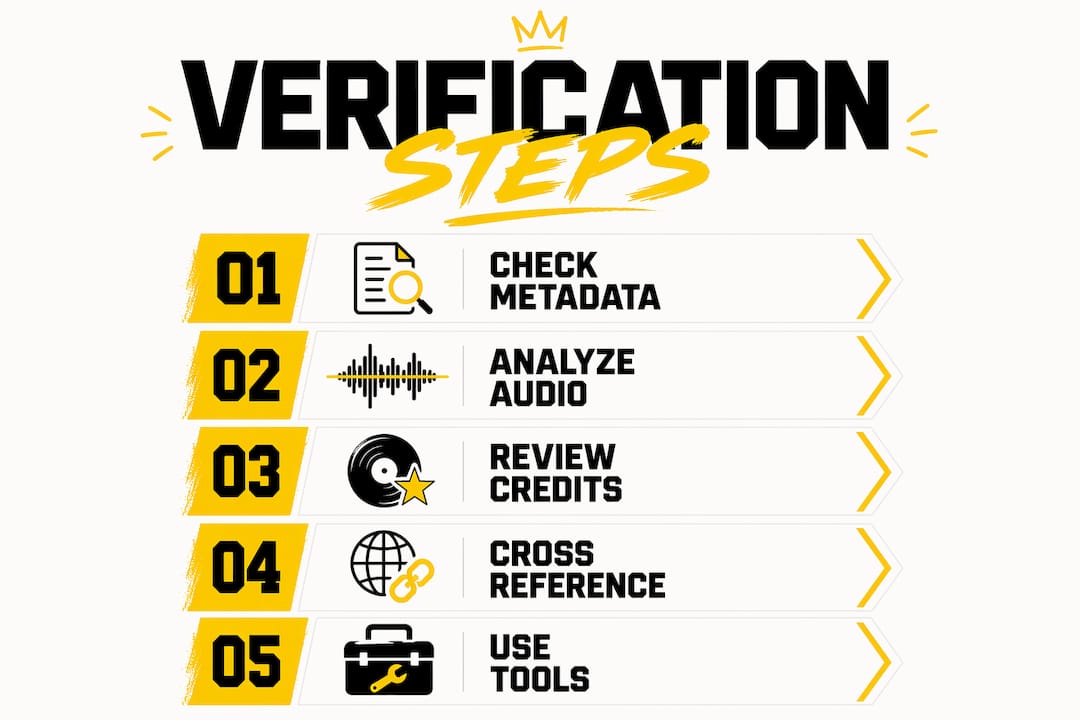
Cross-referencing is the discipline that separates casual listeners from serious music researchers. Pull the track on Genius, check the distributor field on Spotify, search the artist on Discogs, and then verify the social media presence. When all four sources point to the same individual doing everything, you have a verified self-produced track.
Common mistakes when evaluating home-produced music
The most frequent error listeners make is equating production quality with external involvement. High-quality sound does not mean a label was involved. Conversely, rough sound does not confirm self-production. Both assumptions lead to wrong conclusions.
Here are the most common mistakes and how to avoid them:
- Relying on one source. A single Genius credit or one social media post is not enough. Build a multi-source verification habit before drawing conclusions.
- Ignoring the catalog. Self-producing artists move toward rapid iteration and frequent releases, learning audience preferences in real time. A growing catalog with consistent stylistic evolution is a strong authenticity signal.
- Confusing co-production with self-production. Some tracks list two producers. That is co-production, not self-production. Check whether one of those names is a hired engineer or a genuine creative collaborator.
- Missing the AI signals. Tracks with no social history, no live footage, and no artist interviews warrant deeper scrutiny. Run them through an AI detection tool before classifying them as independent.
- Overlooking distributor metadata. The label field on Spotify often reads as the artist's own name or a personal imprint when a track is self-released. A major label name in that field is an immediate disqualifier for self-production.
"The most reliable verification workflow combines metadata review, social footprint analysis, and active listening. No single clue is definitive. The pattern across multiple sources is what tells the real story."
Self-production is a long-term economic strategy, not a budget workaround. Artists who self-produce retain full ownership of their masters and control every revenue stream. That context matters when you are evaluating a track. A self-produced artist has skin in the game at every level.
Key takeaways
Identifying self-produced music tracks requires triangulating metadata, audio analysis, and social footprint evidence rather than relying on any single indicator.
| Point | Details |
|---|---|
| Metadata is your first stop | Check Genius and Discogs for single-name credit blocks covering production, writing, and engineering. |
| Audio clues reveal authenticity | Listen for natural vocal imperfections, dynamic variation, and unconventional transitions on headphones. |
| Polish does not rule out self-production | Many independent artists achieve studio-grade sound, so quality alone is not a reliable indicator. |
| Triangulate across multiple tools | Combine Soundverse Trace, Spotify distributor fields, and social media history for confident verification. |
| Catalog growth confirms the pattern | Self-producing artists release frequently and show clear stylistic evolution across their body of work. |
Why recognizing self-produced work changed how I listen to music
I spent years reviewing music without thinking much about who actually made the beat. Then I started digging into credits and realized how often the most emotionally resonant tracks were made by one person in a bedroom or a small home studio. That discovery changed everything about how I evaluate music.
The biggest lesson I took from that shift is that production credit research is a form of respect. When you take the time to verify that an artist wrote, produced, mixed, and released a track entirely on their own, you understand the weight of what you are hearing. Self-production builds sustainable royalties and creative freedom in a way that label deals rarely do, and that economic reality shapes the music itself.
I also think the music industry undersells how hard it is to maintain consistent quality as a solo creator. The main challenge for self-producing artists remains consistent quality output and meaningful audience connection. When you hear an artist who has cracked that problem, the work carries a different kind of authority. Neakjohnson's catalog is a good example of that. The growth from one release to the next is audible, and that progression is only possible when one person controls every creative decision.
My advice: build the verification habit before you build the playlist. Knowing what you are listening to makes the music hit harder.
— David
Discover verified self-produced tracks on Neakjohnson
If you want to hear what genuine self-production sounds like at its best, Neakjohnson's catalog is the right place to start. Every track in the archive is self-produced, with full credits, artist background, and release history available so you can see exactly how each song came together.

Neakjohnson, the Seattle hip hop artist behind "Neak Johnson vs. The World," handles production, writing, and creative direction on every release. His work on Spotify and Apple Music shows what one artist with full creative control can build over time. Head to the Neak Johnson archive to explore the full catalog, read the credits, and support an independent artist who does it all himself.
FAQ
What does self-produced mean in music?
Self-produced means a single artist handles all production roles, including beat-making, arrangement, mixing, and often mastering, without a commercial label or external production team. The artist retains full creative control and typically owns the masters.
How do I find who produced a track?
Search the track on Genius or Discogs to view verified production credits. For deeper analysis, Soundverse Trace can break down composition layers to identify the beat maker when standard credits are incomplete.
Can a self-produced track sound professional?
Yes. Many independent artists achieve studio-grade sound using DAWs like Ableton Live, FL Studio, and Logic Pro X combined with professional plugins. Production polish alone is not a reliable indicator of label involvement.
What are signs a track might be AI-generated rather than self-produced?
AI-generated tracks often show repetitive melodic phrasing, unnatural transitions, synthetic vocal artifacts, missing ISRC codes, vague producer credits, and no verifiable social media presence or live performance history for the artist.
Why do artists choose to self-produce their tracks?
Self-production gives artists full ownership of their masters and control over every revenue stream. It is a long-term economic strategy that builds sustainable royalties and creative independence rather than a shortcut to save money.